
Skinny kid, heavy weights, and one beach photo that changed everything
Disclosure: This post contains affiliate links. As an Amazon Associate, I earn from qualifying purchases at no extra cost to you.
First attempts at burning off energy
While other kids trained properly, I was jumping between ladders and gym mats, living in my own world, playing rather than training. I always had a ton of energy as a kid, so my parents’ first attempt to channel it was karate. The problem? I couldn’t focus on slow, precise movements. I had too much energy and too little patience. After three months, everyone agreed it wasn’t working, me included. My dad had a home gym in the basement with his friends, and sometimes I’d go down there with him, but I never had any real drive to train on my own. It just wasn’t “mine.”
The pool changes everything
Around third grade, I heard from friends, K and Bobo, that they were going to swimming training. I didn’t pay much attention at first since I couldn’t swim at all. But eventually the idea clicked: I wanted to train with them. My parents didn’t need much convincing, but first I had to actually learn how to swim.
One of the coaches specialized in teaching beginners like me. He got along well with my dad, and before long he had a nickname, Wazzarski, after the “wazzup” clip from Scary Movie. He was incredibly kind, patient, and great with younger kids. After a few sessions, I had no problem staying afloat. I was ready.
Training was split into five levels. I started at level two, since Wazzarski already knew what I could do. K, Bobo, and another friend EM were at level three, so we’d pass each other as their sessions started and mine ended. After a few months, I joined them at level three. That’s when things got serious: at least five sessions a week, at least a kilometer in the water, ninety minutes per session. Bobo dropped out before I even got there. K held on a bit longer, but eventually he quit too. I was the last one left from my group of friends.

One day after training, I saw Wazzarski talking to my dad. He offered to move me up to the fourth group. I thought, nice guy, should be fine. I was very wrong. The Wazzarski I knew stayed with the first group. The Wazzarski of the fourth group was my first truly ruthless coach. No more fun, this was serious work now.
I swam six times a week, ninety minutes per session, always at least a kilometer and a half. I was never a masochist, but I genuinely enjoyed that training. I’d often feel the endorphins long after the session ended. We had competitions too: first at our own pool, then trips to other cities. At home I was often on the podium, rarely first, because there was someone in my age group with a year more experience, but second and third place came regularly. What mattered most to me wasn’t winning. It was keeping the routine going. I was lucky that I actually loved the process, and results felt like a bonus.
A move forced me to stop training after about two years. I tried to find a new group. One coach said I should move to a better group, but the commute by train was too long and too expensive. Another time, a bus was supposed to pick me up in the evening. It was winter, dark, cold, around 5pm. The bus never came. That killed my swimming spirit for good.
Training at home and first real jobs
For the next few years I trained at home, with dumbbells, a barbell, and a bench I got for my birthday. By the time I was fifteen, I already understood that routine was everything. I’d wake up earlier than I had to and do core work and quiet exercises so I wouldn’t wake anyone up. I was still lean from swimming, so a six-pack showed up within two months.
Around that time I started working, first in a brewery, then in a club. Anyone who’s worked in a brewery during a major tournament knows what that’s like. The money was good, but I was mostly there for the social side. I worked in hospitality from seventeen to twenty-one, and by the end I knew exactly what it meant to be completely drained after a hard shift.
Once money started coming in, I signed up for my first gym. Close, cheap, clean, ideal. I went regularly two or three times a week, split into chest and triceps, back and biceps, and legs. I kept that up until problems at school took away my motivation. The final blow was the pandemic, which wiped out the gym and my income at the same time. After the lockdown, I only went back once to cancel my membership.
Starting over, again
After a few difficult periods, motivation eventually came back. I signed up for a gym while going through my professional training and trained for over a year, gaining from 71 to 80kg. I felt the progress. My arms finally looked like arms, not sticks. My whole life I’d heard people call me skinny, not cruelly, just as a neutral observation that there wasn’t much there. For a while, I finally stopped hearing it.
But in the final months I was showing up less and less, and eventually I stopped going altogether.
About five months later, my girlfriend and I went on holiday abroad. A good trip overall, but that’s where my biggest motivator appeared. She took a photo of me on the beach. I was standing in the water, around 74kg at the time. Looking at that photo, I could see that a few months off had sent me almost back to square one. My arms had returned to what they were before that year of training, narrower, without the mass I’d worked so hard to build. I’d always been reasonably fit, always lean, but now I knew what I was capable of, and what I’d thrown away through inconsistency. It hit me harder than anything before. I thought to myself: not again.
What changed this time was not just motivation. I had tried that before and it had not been enough. The full story of what I actually built the system around is in How I Finally Stopped Quitting the Gym — that post covers the structure behind why it stuck this time when it had not before.
The gym that actually stuck
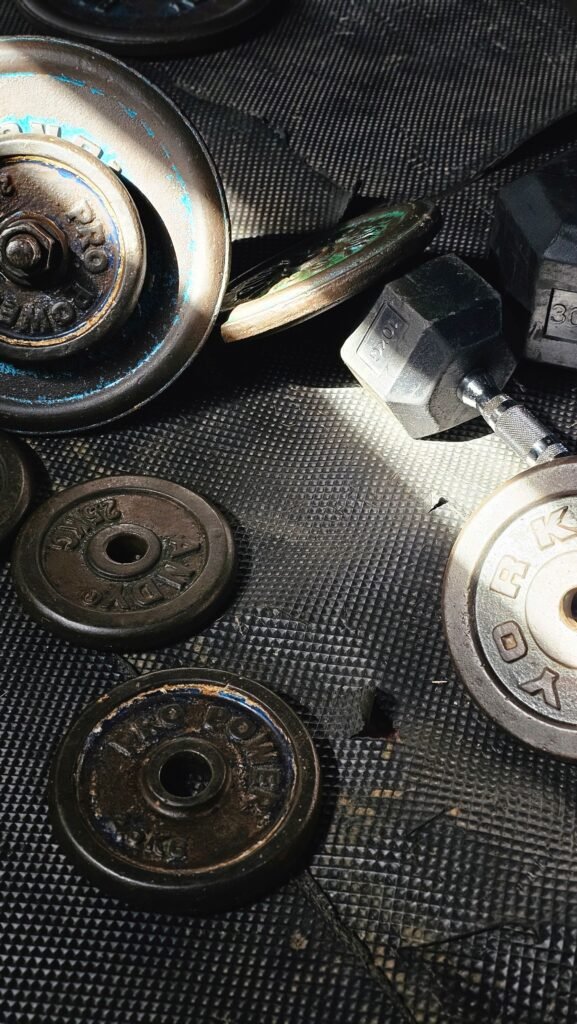
A month after that holiday I was sitting in a new gym, signing a two-year contract. The most expensive I’d ever joined, €70 a month, discounted for my age and the long commitment. I treated the price as extra motivation not to stop. And it wasn’t without reason: no crowds, air conditioning, a wellness area. I started with two personal training sessions and a body check. I was 72 to 73kg at the time.
I structured my training around push and pull, always with legs included in every session. A separate leg day never worked for me since I skipped it too often. After the main session, always a short, intense core workout. The reward: the sauna. I avoided it for a long time, but once I finally went in, I never looked back. I wrote about it separately because it became more than just a recovery tool Sauna After Every Workout covers both the habit and the reasons behind it. Game changer.
After a year I reached 83 to 84kg. Nutrition was the part that made the difference more than anything else. I started tracking protein seriously and added creatine monohydrate around the time the scale stopped moving — I use MyProtein Creatine Monohydrate (link). The full breakdown of how I approached it is in How I Tracked Protein to Gain 10kg Training helped, but the real key was tracking protein, how much and when. I started feeling stronger, but also less mobile. In 2026 I got interested in calisthenics, exercises like muscle-ups where you build real functional strength and mobility at the same time. Before I could get started, though, I developed a hernia. I put my ego away and kept training with caution until the operation, with one goal: maintain what I’d built, not add to it. Now I’m a week post-op, and the only thing I’m doing is walking, but everything is going according to plan.
My main motivation was never about being the biggest or the best. It’s about staying healthy and moving without limitations in everyday life. I still want to keep growing and reach my goals, but not at the cost of my health. I’m going to need it for a few more years yet.
The content on this blog is based on my personal experience and does not constitute medical, nutritional, or fitness advice. Always consult a qualified doctor or professional before making changes to your training, nutrition, or lifestyle.